
Occipital Nerve Decompression Surgery (NDS)
Occipital Neuralgia (ON)
New Daily Persistent Headache (NDPH)
Chronic Daily Headache (CDH)
Occipital Nerve Decompression Surgery (NDS) vs Occipital Nerve Stimulator (ONS)
Occipital Nerve Stimulator (ONS)
MAP YOUR PAIN
We can help you discover if our life altering technique can do you for you what it has done for hundreds. Reduce your head and neck pain!
If you are dealing with occipital neuralgia (ON), chronic daily headache (CDH), or new daily persistent headache (NDPH) and feel like you’ve run out of effective options, take Dr. Carlton Perry’s Free Pain Survey or call our office at 713.522.8228. It includes an extensive interview and interactive 3D anatomical modeling to help assess whether nerve decompression surgery may address the compression-related component of your pain.

There Is Help For Your Head and Neck Pain.
Many patients with daily or near-daily head and neck pain from occipital neuralgia (ON), chronic daily headache (CDH), or new daily persistent headache (NDPH) eventually feel worn out and disillusioned. They’ve tried the usual medications, injections, nerve blocks, and other classic therapies, only to find the relief doesn’t last. The real reason these options often fall short is that inflammation and mechanical compression are squeezing the occipital nerves and restricting blood flow.
Are you serious about treating your head and neck pain? Let us discover a treatment that can help you start enjoying your life again.

Important Note: This is not medical advice, and individual results vary. Neither approach is a treatment for classic episodic migraine (though some patients have overlapping conditions). The best way to determine what might help your specific situation is a thorough evaluation.
Call Now. Get Your Life Back.
We can help you discover if our life altering technique can do you for you what it has done for hundreds. Reduce your head and neck pain!
Where you go for nerve decompression surgery first truly matters.
Dr. Carlton Perry does not cut nerves and performs immediate reconstruction if needed during the procedure.
Chronic Daily Headache is usually refractory to treatment with medications that are generally helpful for migraine. Start the Free Pain Survey or call our office at 713.522.8228 to learn more. Patients have come from all 50 states and 12 foreign countries for this evaluation.

Schedule your next appointment with our specialist to find out if YOU are a good candidate 713.522.8228
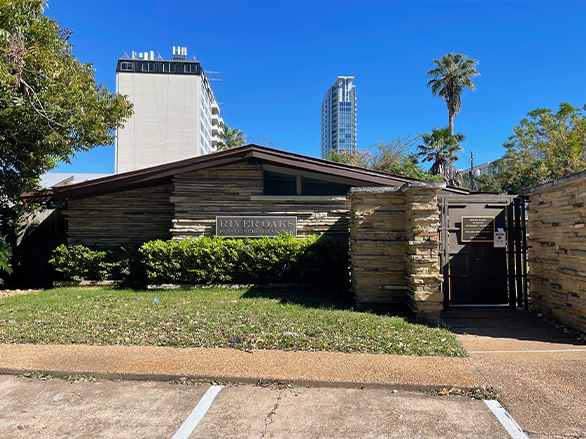
Our Office
River Oaks Plastic Surgery Center
2707 Ferndale St. Houston, Texas 77098
Phone: (713)-522-8228
Fax: (713)-522-9399
E-Mail: info@chronicdailyheadache.com
Web: www.chronicdailyheadache.com
Office Hours
Monday – Friday:
9:00 A.M. – 4:30 P.M.
Frequently Asked Questions
1. Could my “migraine” actually be occipital neuralgia or another peripheral nerve problem?
Yes, sometimes — and this is one reason chronic head pain can be so frustrating. Occipital neuralgia, post-traumatic headache, New Daily Persistent Headache (NDPH), cervicogenic headache, and migraine can overlap in the way they feel. A patient may be told “migraine” because the pain is severe, causes light sensitivity or nausea, or spreads toward the temple or eye. Those symptoms do not automatically tell us where the pain is starting.
When I evaluate someone who has failed years of standard headache treatment, I pay close attention to the starting point of the pain. Pain that begins in the upper neck or back of the head, follows the course of an occipital nerve, is associated with scalp sensitivity or tenderness over the nerve, and can be reproduced by pressure is a different clinical pattern from a headache that simply happens to hurt in the back of the head. Temporary improvement after a carefully placed local anesthetic block can add useful information.
The goal is not to replace one label with another casually. It is to determine whether a peripheral nerve is contributing to the pain. Some patients genuinely have more than one headache disorder at the same time. Treating a compressed or injured nerve may improve the nerve-generated portion of the pain while leaving an independent migraine disorder unchanged.
2. How do I map my pain in the Free Pain Survey, and why does it matter?
The Free Pain Survey includes an interactive 3D model of the head and neck, part of a proprietary platform developed by Dr. Carlton Perry. Instead of trying to describe your pain in words, you show where it starts, where it travels, and how it moves.
This matters because nerve compression pain tends to follow recognizable patterns. It often begins at a specific point at the back of the head or upper neck and travels along the path of a nerve, such as the greater, lesser, or third occipital nerve. A diffuse headache with no clear starting point looks very different on the map.
The survey is an abbreviated version of Dr. Perry’s full evaluation. It combines your pain map with a history of your symptoms and past treatments, and Dr. Perry personally reviews every survey to judge whether your pain shows a pattern consistent with nerve compression and whether a full evaluation makes sense. You can save your progress and return later through your own secure login. The survey is preliminary screening only; it does not provide a diagnosis or establish a physician-patient relationship.
3. Can I have more than one headache diagnosis at the same time?
Absolutely. This is common in difficult chronic headache patients. A person can have occipital neuralgia plus migraine, post-traumatic headache plus occipital neuralgia, NDPH with migrainous features, or a cervical pain disorder together with a peripheral nerve injury.
That matters because one treatment may improve one component while leaving another unchanged. In the published Houston case series, which Dr. Perry co-authored, some patients had an occipital pain syndrome that improved after nerve decompression while a separate episodic migraine pattern remained. That is a useful clinical lesson: improvement in one pain generator does not mean every headache mechanism has been “cured.”
When a patient has tried many therapies, I find it more productive to map the pain into components: where it starts, what triggers it, whether there are distinct headache patterns, what a nerve block changes, and which symptoms move together. That approach is usually more informative than trying to force years of symptoms into a single diagnosis.
4. What is post-traumatic headache, and can a head or neck injury affect the occipital nerves?
Post-traumatic headache is headache that begins in close temporal relationship to an injury to the head or neck and persists after the injury. It may resemble migraine, tension-type headache, or another headache phenotype, so the history of the injury and the timing of onset are often more useful than the quality of the pain alone.
An injury can also affect structures outside the skull. Direct blows, whiplash, traction, prior surgery, and repetitive trauma can irritate or injure peripheral nerves. In the occipital region, a nerve may later be surrounded by thickened fascia, scar-like tissue, altered muscle relationships, or a painful neuroma after direct nerve injury. Published surgical series have reported good outcomes in selected patients with post-traumatic occipital pain, but not every post-traumatic headache is a peripheral nerve problem.
When the pain begins at the site of injury, remains localized to an occipital nerve distribution, is tender to touch, produces scalp sensitivity, and has failed conventional treatment, I look carefully for a peripheral nerve component rather than assuming every symptom is coming from the brain or cervical spine.
5. How is post-traumatic headache different from occipital neuralgia?
These diagnoses answer different questions. “Post-traumatic headache” describes the relationship between the headache and an injury. “Occipital neuralgia” describes a pain syndrome involving the occipital nerves. A patient can have one, the other, or both.
For example, someone may develop a daily headache after a concussion that is diffuse, light-sensitive, and not particularly tender over an occipital nerve. That may be a post-traumatic headache without clear occipital neuralgia. Another patient may strike the back of the head and immediately develop focal pain at the base of the skull that shoots upward, is exquisitely tender over the greater occipital nerve, and improves with an occipital block. That patient may meet criteria for both post-traumatic headache and occipital neuralgia.
This distinction matters because treatment should follow the pain generator, not merely the diagnostic label. Nerve decompression is considered only when there is persuasive evidence that a specific peripheral nerve is contributing materially to the persistent pain.
6. Why haven’t my headache medications worked?
Medication failure does not automatically mean that you need surgery. It does tell us to revisit the diagnosis and the pain generator. Preventive and abortive headache medicines are designed around particular biologic pathways. If a substantial portion of your pain is being driven by an injured or mechanically irritated peripheral nerve, medication may reduce the nervous system’s response without removing the mechanical trigger itself.
I would be cautious with the claim that medication “cannot reach” a compressed nerve. Peripheral nerve compression can impair local microcirculation, and experimental work has shown that compression can reduce intraneural blood flow. But medication failure is more complicated than blood delivery alone. Drug choice, dose, absorption, central sensitization, overlapping diagnoses, medication overuse, and the underlying pain mechanism all matter.
What gets my attention is a consistent pattern: focal occipital onset, nerve tenderness or allodynia, repeated failure of otherwise reasonable medical therapy, and at least some response to treatments aimed directly at the peripheral nerve. That combination suggests we should look beyond simply trying another medication from the same general treatment pathway.
7. If Botox helped for a while but then wore off, what does that mean?
It means Botox affected something important in your pain pathway, but it does not by itself tell us exactly what that was. Botox can reduce muscle activity and alter peripheral pain signaling. In some patients with occipital pain, improvement may reflect reduced mechanical irritation around a nerve; in others, it may reflect a more general effect on pain transmission.
Temporary benefit can still be diagnostically useful. I am interested in where Botox was injected, which symptoms improved, how quickly they improved, and whether the pain returned in the same anatomic pattern. Published studies have shown that onabotulinum toxin can reduce pain and headache days in some patients with greater occipital neuralgia, although the evidence base is much smaller than it is for chronic migraine.
A patient who repeatedly gets meaningful but temporary relief from treatments directed at an occipital region deserves a careful peripheral nerve evaluation. That does not mean Botox “proves” that decompression will work. It is one piece of a larger clinical pattern.
8. Why did physical therapy, chiropractic treatment, massage, or stretching help only briefly — or not at all?
Those treatments are directed mainly at muscles, joints, posture, and movement. They can be very helpful when those structures are the primary pain generator or when muscle spasm is amplifying another problem. They may also temporarily reduce tension around an irritated occipital nerve.
If the nerve itself is chronically compressed, scarred, tethered, or injured, however, improving muscle mechanics may not remove the entire source of irritation. That can explain why a patient feels better for hours or days and then returns to the same baseline once normal activity resumes. The opposite is also true: if a patient gets durable relief from physical therapy, surgery may not be necessary.
I do not consider failed therapy proof of nerve compression. I consider it part of the history. What matters is whether the remaining pain follows a coherent nerve pattern and is supported by examination and targeted diagnostic treatment.
9. Why does my pain keep returning after injections, blocks, or ablations?
Many interventional treatments change pain signaling without changing the structure that is irritating the nerve. If an anesthetic block quiets a nerve, the anesthetic eventually wears off. If steroid reduces local inflammation, the effect may fade. If radiofrequency changes conduction, the nerve may recover or another branch may continue to generate pain.
This is one reason repeated temporary success can be clinically useful even when it is frustrating. A reproducible response tells us that a particular peripheral pathway may matter. The next question is whether there is a persistent mechanical problem that can be identified and safely treated, or whether continuing nonsurgical management is still the better choice.
I am more persuaded by a consistent pattern over time than by one dramatic but isolated procedure. The history of what worked, exactly where it worked, and how the pain returned can help map the pain generator.
10. Which headache symptoms need urgent medical evaluation before anyone talks about decompression surgery?
Nerve decompression is an elective treatment for a selected chronic pain problem. It is not the right first conversation for a new or rapidly changing headache that may represent an emergency or another secondary cause.
Seek urgent medical evaluation for a sudden “worst headache” or thunderclap onset, new neurologic deficit such as weakness, facial droop, confusion or trouble speaking, loss of consciousness, fever with neck stiffness, a new severe headache during pregnancy or the postpartum period, a new headache with significant recent trauma, or a new pattern accompanied by concerning systemic illness. New headache in a patient with cancer, significant immune suppression, or other major medical disease also deserves prompt medical assessment.
Once dangerous secondary causes have been addressed, a persistent occipital pain pattern can be evaluated on its own merits. Good peripheral nerve surgery begins with making sure the patient does not first need a completely different kind of care.
Sources: [11]
References
- Headache Classification Committee of the International Headache Society. ICHD-3, 13.4 Occipital neuralgia. ichd-3.org
- Blake P, Nir RR, Perry CJ, et al. Tracking patients with chronic occipital headache after occipital nerve decompression surgery: A case series. Cephalalgia. 2019;39(4):556-563. PMID: 30217120. doi.org (Dr. Perry is a co-author.)
- Austen WG Jr, Remy K, Packowski K, et al. Refractory occipital neuralgia treatment with nerve decompression surgery: a case series. Front Neurol. 2023;14:1284101. PMID: 38090265. doi.org
- Headache Classification Committee of the International Headache Society. ICHD-3, 5. Headache attributed to trauma or injury to the head and/or neck. ichd-3.org
- Remy K, Hazewinkel MHJ, Knoedler L, et al. Aetiologies of iatrogenic occipital nerve injury and outcomes following treatment with nerve decompression surgery. J Plast Reconstr Aesthet Surg. 2024;95:349-356. PMID: 38959621. doi.org
- Headache Classification Committee of the International Headache Society. ICHD-3, 5.2 Persistent headache attributed to traumatic injury to the head. ichd-3.org
- Rydevik B, Lundborg G, Bagge U. Effects of graded compression on intraneural blood blow [sic]. An in vivo study on rabbit tibial nerve. J Hand Surg Am. 1981;6(1):3-12. PMID: 7204915. doi.org
- Marcolla IMG, Camargo CHF, Coutinho L, et al. Treatment of occipital neuralgia using onabotulinum toxin A. Acta Neurol Scand. 2022;145(2):193-199. PMID: 34542909. doi.org
- Gfrerer L, Hansdorfer MA, Amador RO, et al. Muscle Fascia Changes in Patients with Occipital Neuralgia, Headache, or Migraine. Plast Reconstr Surg. 2021;147(1):176-180. PMID: 33370063. doi.org
- Janis JE, Hatef DA, Ducic I, et al. The anatomy of the greater occipital nerve: Part II. Compression point topography. Plast Reconstr Surg. 2010;126(5):1563-1572. PMID: 20639804. doi.org
- Do TP, Remmers A, Schytz HW, et al. Red and orange flags for secondary headaches in clinical practice: SNNOOP10 list. Neurology. 2019;92(3):134-144. PMID: 30587518. doi.org
If you are tired of dealing with that shooting pain in the back of your head and neck, you’re not out of options. Start the Free Pain Survey or call our office at 713.522.8228. All correspondence is confidential – we’re here to listen and help you explore whether nerve decompression surgery might finally make a meaningful difference.